Photojournalism Paper
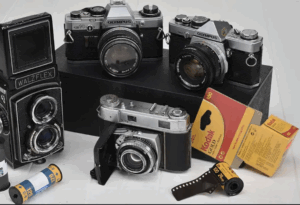
Photojournalism is a form of journalism told through photography. Photographers capture pivotal moments happening around the world which can range from sports, politics, war, crime, education, or entertainment such as celebrities. Even though it is still photography, photojournalism is still journalism, which means ethics are still important. It is “visual”journalism, giving us images instead of only words of information on a page.
Even though newspapers and magazines are not the number one sources anymore, I would argue that journalism as a profession is still very much alive. News will always be relevant, because society simply cannot function without it. Though words on a paper provide the information, visuals allow us to truly understand the reality of the issues and events happening in the world. I think that photojournalism and written journalism are teammates. The internet has taken the place of traditional print as the main news source, and with it, a lot of outlets, companies, and even influencers can now share information. Today, news is about who can reach people first and who is there, ready with their camera in hand, to capture those significant moments as they are happening.
It’s also important to remember that photos don’t always just support a story, but they can be the story. Although photos and stories work well together, as an article by the New York Times Licensing Group points out, “photos add context and comprehensibility”. An image can sometimes communicate more than words ever could, making photojournalism important for connecting people to events in a direct way.
To make a living in photojournalism today, it is of course about having some talent in photography, but photographers must also understand business, marketing, and social media. Building a career requires networking, professionalism, and being able to work quickly and efficiently. Using your resources wisely and consistently putting yourself out there is what can make a person significant in the career. For example, even the world’s most famous photographer might not be the one to capture a shocking or historic event. If you happen to be in the right place at the right time, your photo becomes the one people need to see. News outlets won’t care about the other guy if he didn’t get the photo you did, they will want your work regardless of your name or reputation.
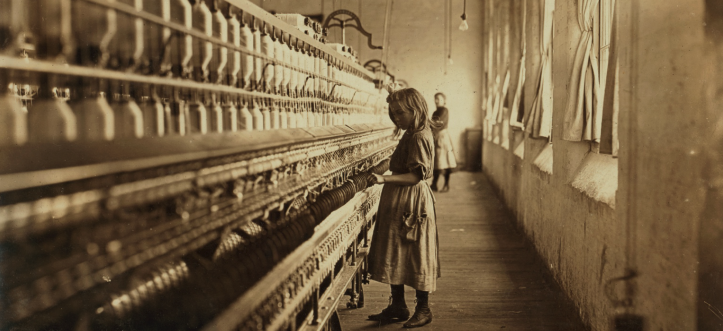
Sadie Pfeifer, a Cotton Mill Spinner, Lancaster, South Carolina, 1908, by Lewis Hine
I chose this photo by Lewis Hine because it really shows the cruelty of child labor and the exhaustion of letting children work so young. The image moves me because the girl lookssmall and fragile compared to the line of machines. It kind of forces the viewer to confront the reality that kids her age should be playing or learning, not working in dangerous factories.
The light source in this photo is natural light coming from the row of windows on the right side. The direction of the light emphasizes how she is turned away from what is likely a beautiful day outside and forced to stay inside and work. The decisive moment is when all the elements in a scene come together, like expression, action, and setting. All those elements tell the full story. In this case, the decisive moment is the girl standing in the middle of her shift, hands on the machine, with her posture showing both focus and fatigue. It feels like Hine caught the perfect moment to reveal her without needing words.
What makes Lewis Hine a great photographer is that he used photography to expose the cruelty of child labor, and his images actually helped lead to reforms in U.S. labor laws. He has access because he posed as an inspector so that he could photograph the conditions the children were in without being stopped. Today, we get access by getting press credentials or working with organizations to document events.
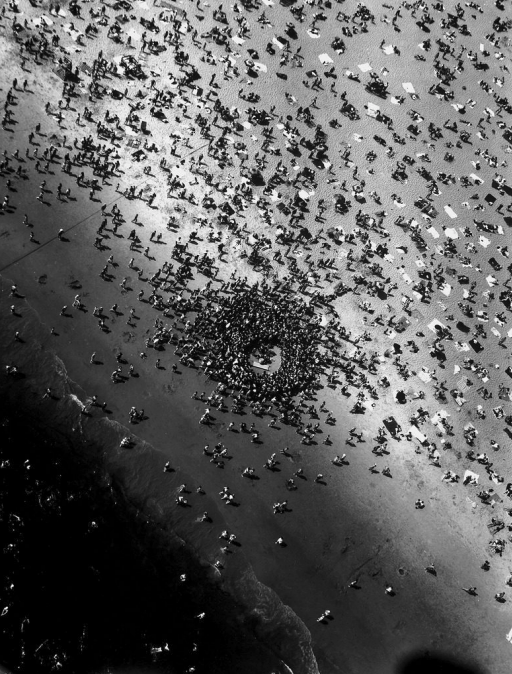
Beach Accident, Coney Island, New York, 1952, by Margaret Bourke-White
Next, I chose Margaret Bourke-White. I chose this photo because of its unusual perspective and the timing of it. The view is in Coney Island showing a woman, Mary Eschner, who almost drowned is reviving in the center. The birds eye view of the beach makes the people look almost like patterns on the beach. What moves me most about this image is how it captures both the people individually but also the crowd as a whole. It is a really fascinating photo to look at because it makes the ordinary scene of a crowded beach feel incredible.
The light source is natural sunlight coming from above, casting shadows of the people, making them look more dramatic. The timing of this photo is definitely a decisive moment. Here, she captured the beach at just the right time and emphasized the light and composition. The people near the water’s edge form a dark circle that draws the viewer’s eye immediately, which is also framing, making it a moment that feels spontaneous and also arranged, even though it wasn’t.
What makes Margaret Bourke-White a great photographer is her innovation. She wasn’t afraid to shoot from airplanes, skyscrapers, or factories. She had a talent for showing familiar things in unfamiliar ways. Bourke-White was also one of the first female war correspondents. She gained access through her connections with LIFE magazine, as she was the first female photographer. To get access is usually working with media outlets, which is still a way to do so today.
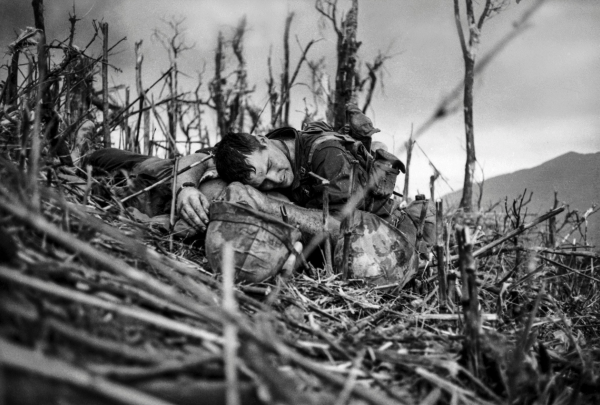
Vernon Wike lost a dying Marine near Hill 881 in Khe Sanh in April, 1967. Photo by Catherine Leroy
This next photograph was taken by Catherine Leroy. I chose this photo because of the emotion it captures. What moves me the most is the vulnerability and sadness on his face. To me he doesn’t look like a soldier but just like any young man. I think that is exactly what Leroy’s goal was when she decided to take these photos.
The light source is natural daylight. The lack of shadows somewhat softens the soldier, which contrasts with unsettling landscape around him. The timing of this photo is definitely a decisive moment. The moment shows the survival and loss war. This is also an example of how photojournalism can be a story on its own.
Catherine Leroy is considered a great photographer because of her determination and
bravery to get these photos. She parachuted into combat zones, worked closely with soldiers, and
risked her life to document the Vietnam war.
She gained access as a photographer by working as a freelancer and inserting herself
directly with the troops. At some point, she also managed to convince the “enemy” to let her
photograph them too. She is one of my favorite photographers and I personally admire her work
and dedication a lot.
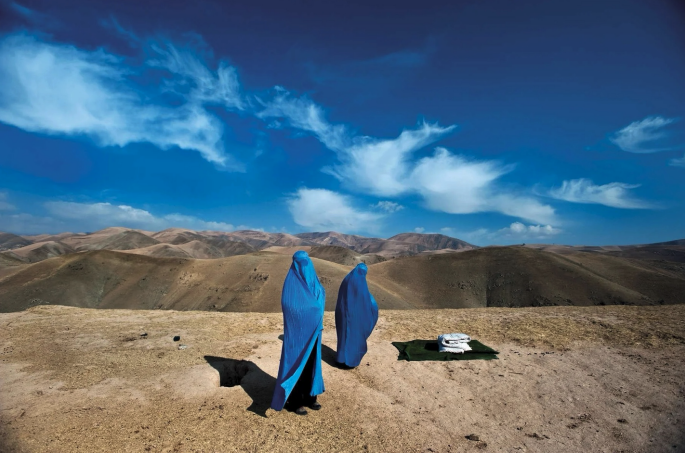
In Afghanistan you seldom see an unaccompanied woman. Noor Nisa, about 18, was pregnant;
her water had just broken. Her husband, whose first wife had died during childbirth, was
determined to get Noor Nisa to the hospital in Faizabad, a four-hour drive from their village in
Badakhshan Province. Photo taken in November 2009, by Lynsey Addario.
This last photo was taken by Lynsey Addario. What stands out is the blue burqas and the
blue sky. They contrast against the earth tones. The photograph feels intimate and because of the
two women. It shows their resilience, isolation, and dignity in one frame. The light source is
natural sunlight. The shadows of the women suggest that the sun is high but slightly to the right,
most likely late morning or early afternoon. Addario captured the decisive moment because the
timing highlights the women standing still in their environment, against the sky representing both
presence and silence.
Lynsey Addario is considered great because I think she balances artistry with
documentary truth. She is able to capture both beauty and hardship drawing viewers into the
human experience behind global issues. Her ability to work in dangerous and restrictive
environments while creating visually striking, empathetic images sets her apart. Addario gained
access because she is a freelance photographer and probably through years of building trust with
these communities.
In journalism, the main big “no-no’s” to avoid are lying or staging events, or edit that
mislead the public. For example, adding smoke to a protest photo to make it look more violent
would be wrong. They should also avoid stereotyping people or letting their own biases show. If
a reporter only photographs one type of person at a community event, it gives an unfair picture.
Respect is also important, especially when covering tragedies. For instance, barging into a
grieving family’s home for photos would cross the line, unless there is a clear public need.
Journalists also must not bribe sources for information, or accept gifts from people they are
covering, because that could make the story biased. Finally, they should never interfere with
events or sabotage other reporters. For example, asking someone to redo a natural moment just
for the camera, or blocking another journalist from getting a shot.
About Author