Photojournalism Paper
Define Photojournalism?
Photojournalism is the practice of telling stories through images that capture real events and truths. Photojournalists are the ones who bravely step forward to document what’s happening in the world, using their cameras to create powerful stories that speak without words. Their images carry honesty and impact, allowing viewers to see and understand reality in a way words alone cannot.
Is there a profession in photojournalism now that newspaper and magazines have declined? What is it?
While there are fewer traditional jobs in photojournalism today due to the decline of newspapers and magazines, the profession still exists in different forms. Many photojournalists now work as freelancers, contributing to online news outlets, nonprofits, or international agencies. Others use digital platforms and social media to share their work directly with audiences. Even though the industry has shifted, the demand for powerful images that tell the truth has not disappeared.
How would you make a living in photojournalism in today’s news and corporate industry?
Making a living in photojournalism today often involves pursuing a combination of commercial work, freelancing, and opportunities with news outlets. However, even with these options, steady employment is not guaranteed. While some photojournalists have built successful careers, many still face the uncertainty of losing work or struggling to secure consistent, paid assignments.
Lewis Hine (1900s–1930s)
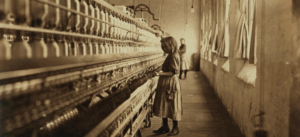
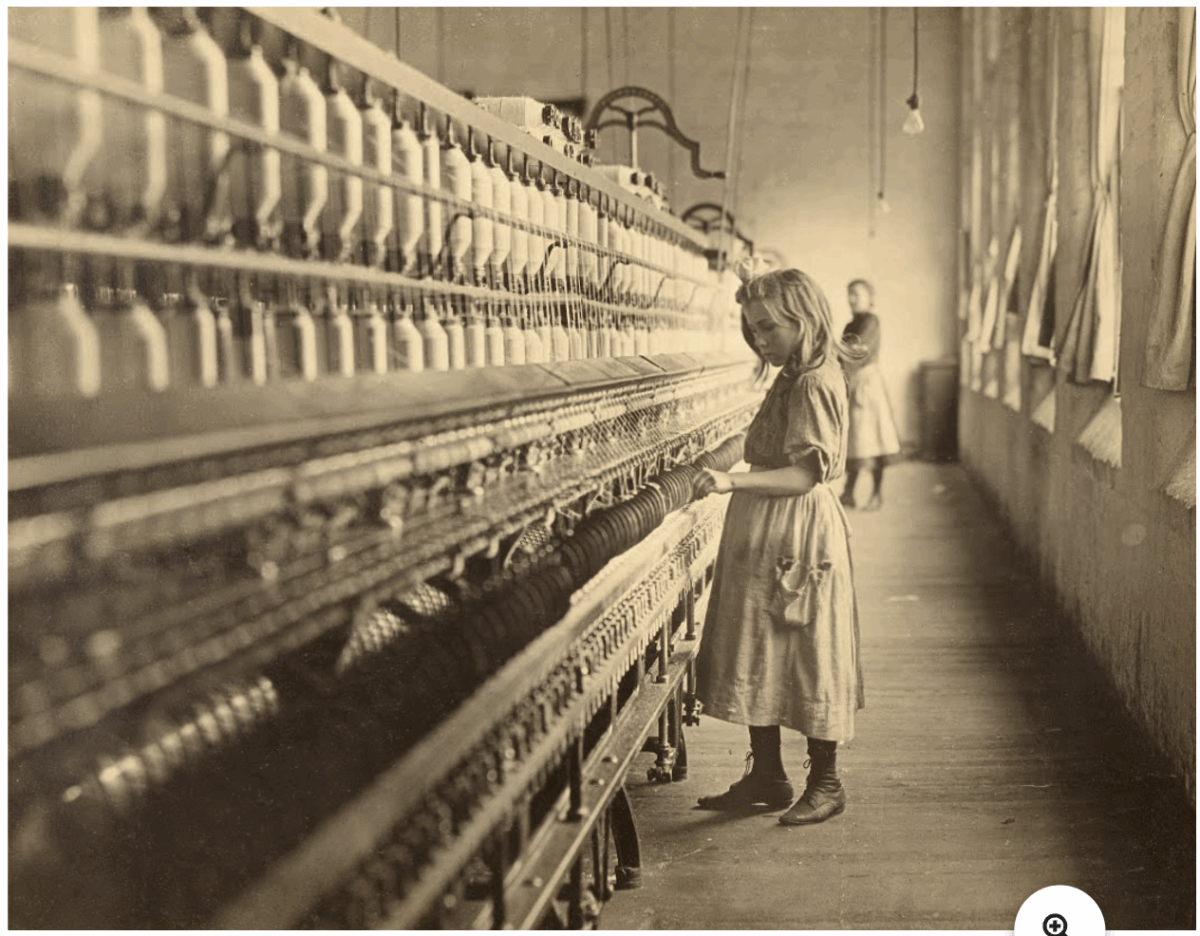
I like this picture because it really focuses on the little girl being somewhere she doesn’t belong. The light source seems to be coming from the window, reflecting off the back wall and making the girl stand out. The photographer captured the decisive moment by showing her in this environment, which highlights her presence against the harshness of the setting.
What makes Hine a great photographer is that his work is in black and white, which really emphasizes the struggle, with the dirt representing what these young kids had to experience. He gained access by sneaking into factories to photograph the children at work.
Arnold Newman (1930s–1950s)
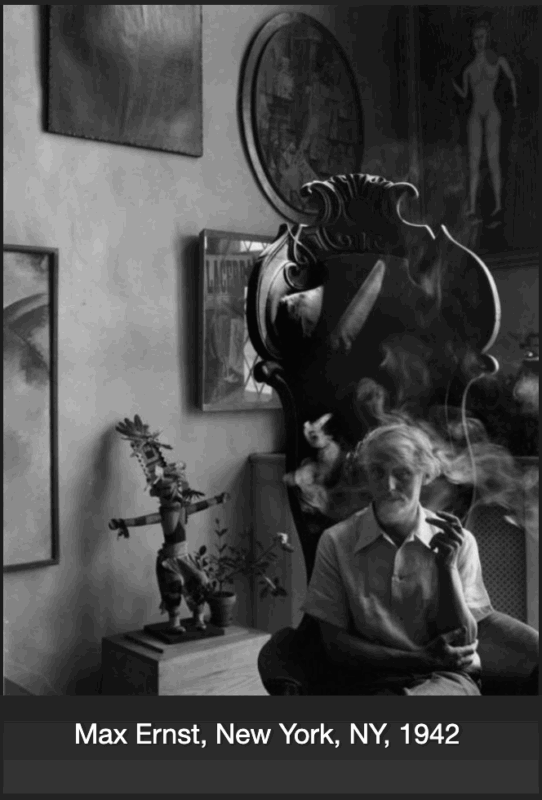
What I like about this photo is the way the smoke rises and interacts with the scene. I also enjoy that it’s in black and white because it helps you notice more details and textures.
The light source seems to be coming from the side near the chair, most likely from a window, with the light bouncing off the wall and softly illuminating the subject.
The timing of the photo is very effective, especially with the smoke and how it frames the subject, while still keeping the person clearly visible.
This is an example of an environmental portrait. What makes Newman great is his ability to photograph people in their own space and convey their personality, using black-and-white images to emphasize mood and character.
Newman typically gained access by working directly with his subjects, often setting up portraits in their homes or studios.
Gordon Parks (1960s-1980s)
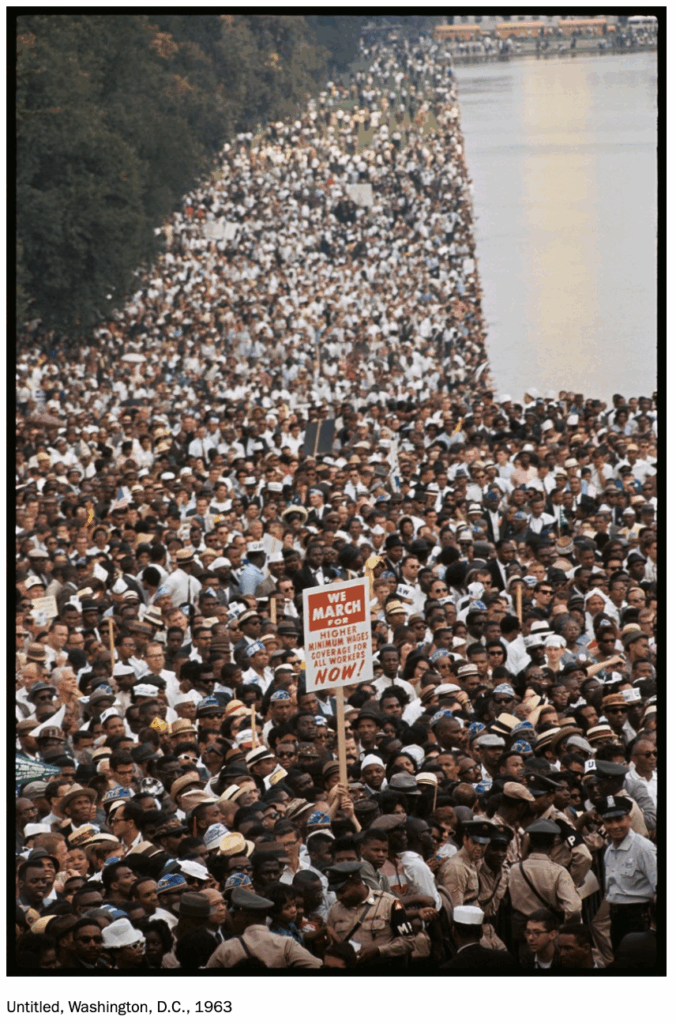
What I like about this picture is that when you look closely, you can see a large crowd of people, yet there is just one sign that stands out among everyone, drawing your attention immediately.
The light source seems to be coming from multiple directions, and I think reflections from water may also be contributing to the lighting, creating depth and highlighting details in the scene.
The timing of this photo is excellent, capturing the soldier blocking others from moving forward while the sign becomes the perfect focal point.
What makes Parks great is that he captured real-world situations in real time. For someone like me, who wasn’t alive when these events occurred, seeing these moments through his photographs provides a vivid and meaningful connection to history.
He probably gained access by arriving early and carefully positioning himself in the crowd, even with many other photographers present, to get a clear and impactful shot.
Lynsey Addario (1990s–Present)
Her work often focuses on conflicts and human rights issues.
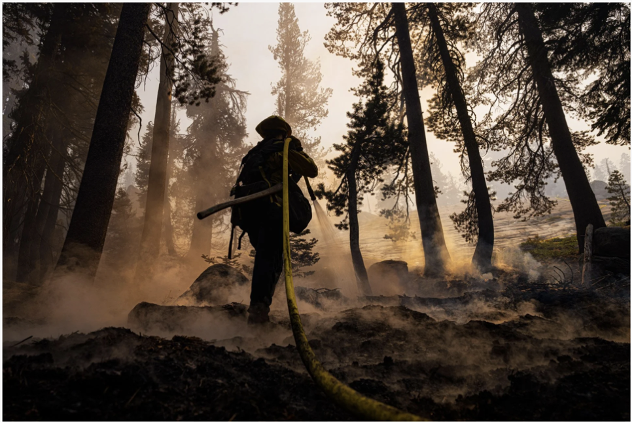
What I like about this photo is that it’s taken from a low angle of a firefighter. At first glance, it looks like he has already put out the fire, but in reality, he’s spraying to make sure it doesn’t spread.
The light source comes from the sky and the smoke, giving the image a warm, yellow tint that adds to the intensity of the scene.
The timing is perfect capturing him in action, the low angle, and the overall composition all come together to make the image breathtaking. I also love that it captures a real-life situation that happened recently and reflects ongoing events. This represents the “decisive moment,” where all elements in the frame align to tell the story effectively.
What makes Addario great is her ability to create images that are both beautiful and powerful. Her use of lighting and composition always centers the subject, conveying emotion and immediacy in every shot.
As for access, she likely gained it by being on location in conflict zones or dangerous situations, which often requires planning, permissions, and a willingness to take risks to document the story.
5)What are ethics of photojournalism? The rules? The no’s no’s?
- Treat all subjects with respect and dignity
- Avoid one’s own biases in the work
- Editing shouldn’t be misled by viewers or misrepresent the subject.
- Do not accept gifts, favors who might seek your coverage
About Author